
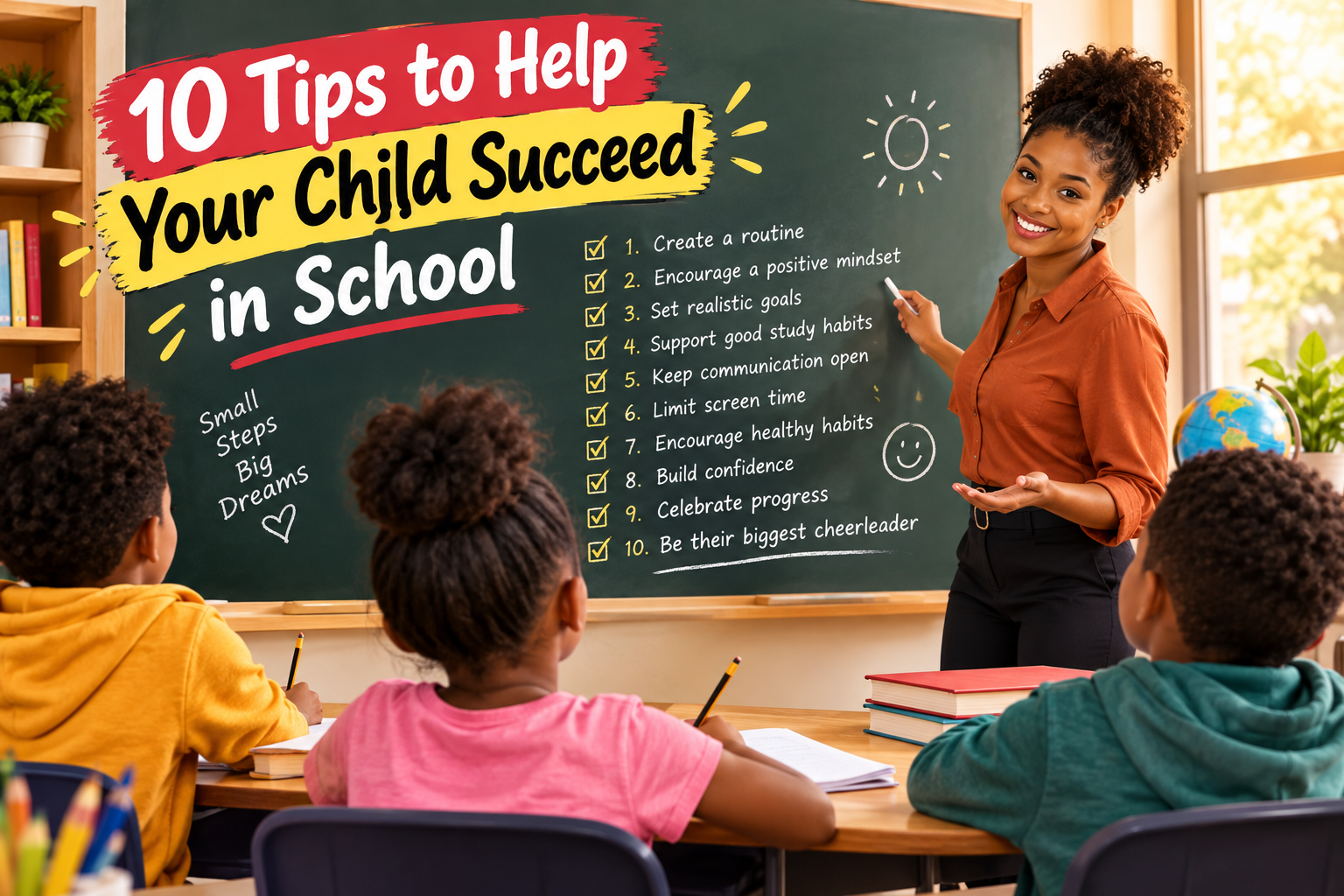
You know your child is capable. You’ve seen the spark when something clicks. So when a report card says otherwise, or homework turns into a nightly standoff, it’s natural to ask yourself what you could be doing differently.
Here’s the reassuring part: you don’t need a teaching degree to help your child succeed in school. What matters most is what happens in the small moments at home, day after day. The ten ideas below are simple, realistic and easy to start this week.
1. Give the Day a Predictable Shape
Kids relax when they know what comes next. A steady rhythm takes the guesswork out of the day and the arguments out of the evening.
- Fix a time for waking up, doing homework and going to bed
- Get school bags ready before bedtime
- Leave enough time in the morning so nobody is rushing
When the routine does the reminding, you don’t have to.
2. Set Aside a Place for Homework
A calm, bright, tidy spot tells your child it’s time to work. It doesn’t have to be a desk in its own room; a clear table in a quiet corner will do.
- Keep phones and the TV out of sight
- Have pens, paper, a ruler and a calculator within reach
- Make sure the chair and lighting are comfortable
3. Show Interest Without Taking Over
Children do better when they can tell their parents care about what they’re learning. The trick is to support, not to do the work for them.
- Swap “How was school?” for “What was the most interesting thing you learned today?”
- Look over homework once it’s done, rather than sitting beside every question
- Go to parent-teacher meetings and read what the teacher writes
- Ask your child to teach you a topic; explaining it is one of the best ways to learn it
4. Celebrate Effort More Than Talent
If a child hears “you’re so smart” all the time, they may start avoiding anything hard in case they stop looking smart. Praise for effort teaches them that trying is what counts.
Try saying:
- “I noticed how long you stuck with that problem.”
- “That didn’t work the first time, and you kept going.”
- “What could you try differently next time?”
Psychologists call this a growth mindset: the belief that ability grows with practice.
5. Keep Reading Part of Everyday Life
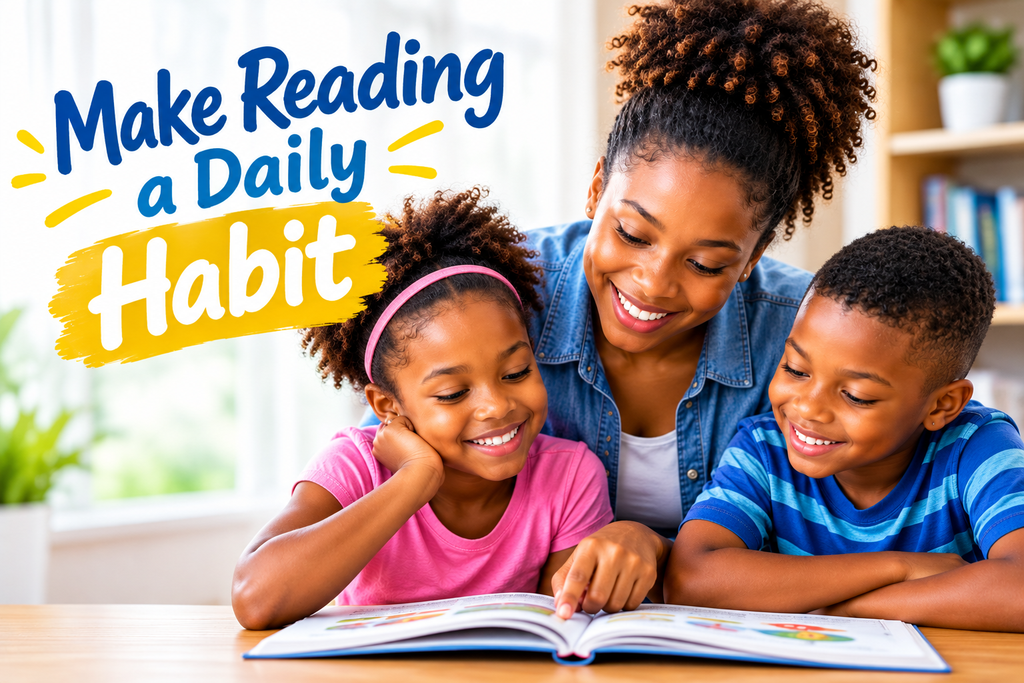
Reading builds vocabulary, focus and understanding, and that pays off in every subject, even mats word problems.
- Aim for 15 to 20 minutes a day, together or alone
- Let your child pick what they read; comics, magazines and sports stories count
- Borrow from the library or swap books with friends
- Don’t stop when they get older, because teenagers benefit too
6. Look After Sleep and Food
Even the brightest child struggles to learn when tired or hungry.
- Most younger children need about 9 to 11 hours of sleep, and teenagers about 8 to 10
- Start the day with breakfast
- Send healthy snacks and water to school
- Cut back on sugary drinks and late-night screens
7. Keep Distractions in Check
Games, messages and social media are built to grab attention, and homework rarely wins that contest on its own.
- Agree on screen limits for school nights
- Charge devices outside the bedroom overnight
- Switch off notifications while your child studies
It helps if the whole household follows the same rules. Children notice what adults do.
8. Teach Them How to Study
Schools expect children to study, but few ever teach them how. Share these habits early:
- Split big assignments into small steps
- Write deadlines in a planner or on a calendar
- Use active recall: quiz yourself with questions or flashcards instead of just rereading notes
- Spread revision across several days rather than cramming the night before
These habits will serve them well beyond school.
9. Make It Safe to Say “I’m Struggling”
Children who fear being scolded or compared to a sibling or classmate tend to hide their difficulties until they get bigger.
- Listen first and keep your voice calm
- Ask what feels hard, and what makes it hard
- Remind them that struggling is a normal part of learning
- Talk to the teacher and agree on a plan together
A child who feels safe will tell you what’s really going on. That’s when you can actually help.
10. Bring In Extra Help Sooner Rather Than Later
Sometimes effort and encouragement at home aren’t enough. A concept missed in a busy classroom or a few bad grades in a row can shake a child’s confidence and leave them stuck.
That’s where one-on-one tutoring can make a real difference:
- Targeted lessons that focus on exactly what your child hasn’t yet understood
- Freedom to ask questions without worrying about what classmates think
- A comfortable pace that is neither rushed nor held back
- Small wins that rebuild confidence
- Exam preparation for school tests, CSEC and CAPE, including technique and study habits
At Students One on One, the lesson is built around your child, not a crowd, so they can catch up, keep up and move ahead.
Is It Time for a Tutor? Watch for These Signs
- Grades are slipping or have stalled
- Your child avoids homework or says they hate school
- You hear “I’m just bad at this” or “I give up”
- Teachers mention trouble concentrating
- Simple tasks take far longer than they should
- Tests leave them anxious or in tears
The sooner you act, the easier it is to turn things around.
Frequently Asked Questions
How do I motivate my child to do better at school? Celebrate effort, break goals into small steps, connect lessons to things your child already enjoys and notice progress as it happens.
How much should I help with homework? Be a guide, not the author. Ask questions and offer encouragement, but let your child do the thinking.
How will I know if my child needs a tutor? If grades are dropping, confidence is fading or homework has become a daily fight, a tutor can help fill the gaps.
Is one-on-one tutoring better than a group class? For most children who are struggling, yes. The whole lesson is shaped around their needs and their pace.
What’s the best age to start tutoring? There isn’t one. Starting early keeps small gaps from turning into big problems.
The Bottom Line
School success doesn’t come from one big change. It comes from good habits, honest conversations and small wins that add up over time. And you don’t have to do it all on your own.
If you’d like expert support for your child, book a one-on-one session with Students One on One and see their confidence and grades grow.
Book Your Child’s First Session →
What do you feel about this post?

Like

Love

Happy

Haha

Sad